What’s a Good Credit Score and How to Improve Yours
Your credit score is a number that gives lenders an idea of how you have managed borrowed money in the past. Banks, credit card companies, landlords, insurers, and other businesses may use it when deciding whether to approve an application and what terms to offer.
A higher score can make it easier to qualify for loans, credit cards, and competitive interest rates. A lower score does not necessarily mean you are irresponsible with money. You may have missed payments, used a large portion of your available credit, have a limited credit history, or simply never used credit before.
Credit scores are not permanent. They change as new information is added to your credit reports, which means steady financial habits can improve them over time.
What Is Considered a Good Credit Score?
Credit score ranges depend on the scoring model being used. In the United States, two of the best-known models are FICO and VantageScore, both of which generally use a range from 300 to 850.
A FICO score is commonly interpreted as:
- Below 580: Poor
- 580–669: Fair
- 670–739: Good
- 740–799: Very good
- 800–850: Exceptional
A score of 670 or higher is generally considered good under the FICO model. However, reaching a particular number does not guarantee approval.
Lenders also consider income, existing debt, employment, the type of credit requested, and their own approval standards. One lender may approve an application that another rejects.
The score is only one part of the decision.
Why Your Credit Score Matters
Your credit score can affect both access to credit and the cost of borrowing.
Imagine two people apply for the same loan. One receives a lower interest rate because the lender considers that person less likely to miss payments. The other receives a higher rate because the lender sees greater risk.
Even a relatively small difference in interest rates can add up over a long loan.
Credit scores may influence:
- Mortgage applications
- Car loans
- Credit card approvals
- Personal loans
- Interest rates
- Credit limits
- Rental applications
The impact varies depending on the lender, location, and type of application.
A strong score does not mean you need to borrow more money. It simply gives you more options when credit is useful.
What Affects Your Credit Score?
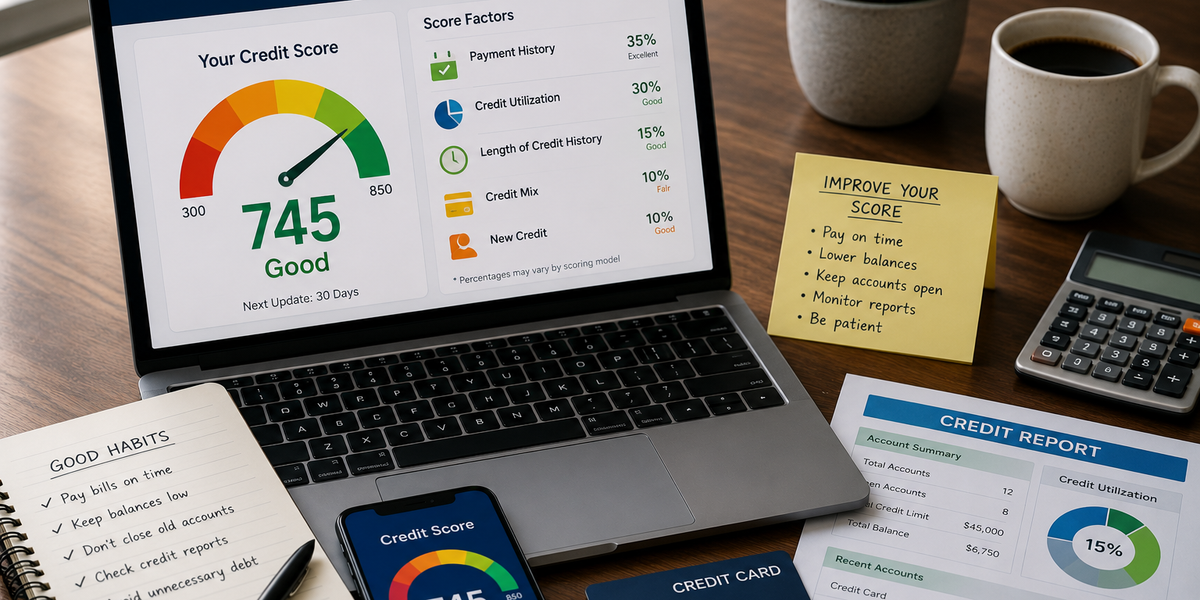
Credit scoring companies do not calculate every score in exactly the same way, but several factors are commonly important.
Payment History
Payment history is usually one of the biggest influences on a credit score.
Late or missed payments may lower your score, especially when they remain unpaid or are reported to credit bureaus. The longer a payment is overdue, the more serious the effect may be.
Paying bills on time is one of the most reliable ways to protect and improve your credit.
If remembering due dates is difficult, set up automatic payments or calendar reminders. At minimum, make the required payment by the deadline.
Credit Utilization
Credit utilization is the percentage of your available revolving credit that you are currently using.
If you have a credit card with a $5,000 limit and a $2,500 balance, your utilization is 50%.
Lower utilization is generally better because consistently using most of your available credit may suggest financial pressure.
The commonly repeated advice is to stay below 30%, but that is not a strict dividing line. Lower balances can be better for your score, and the effect may vary depending on the scoring model.
Paying balances down can reduce utilization. You can also make payments before the statement closes so a lower balance is reported.
Length of Credit History
Credit scoring models may consider how long your accounts have been open.
A longer history gives lenders more information about how you manage credit. This is why closing an old credit card may sometimes affect your score, particularly if it reduces the average age of your accounts or lowers your total available credit.
That does not mean every old account should remain open forever. If a card has expensive annual fees or encourages overspending, closing it may still be reasonable.
Consider the financial value of the account, not only its possible effect on your score.
Credit Mix
Having experience with different types of credit may contribute to a score.
Credit accounts generally include revolving credit, such as credit cards, and installment loans, such as mortgages, student loans, personal loans, and car loans.
You do not need to open new accounts simply to create a more varied credit mix. Taking on unnecessary debt to improve a score can cost more than it helps.
New Credit Applications
When you apply for a loan or credit card, the lender may perform a hard credit inquiry.
One inquiry may have only a small effect, but several applications within a short period can make you appear more dependent on new credit.
Apply selectively and avoid opening accounts only for short-term discounts or promotional offers.
Checking your own credit is generally considered a soft inquiry and does not usually lower your score.
How to Improve Your Credit Score
Improving credit is usually less about finding a shortcut and more about building a consistent record.
Start by paying every bill on time. If you have missed payments, bring overdue accounts current when possible and contact the lender if you are struggling. Some lenders may offer payment arrangements or temporary assistance.
Next, work on reducing credit card balances. Focus on high-interest debt while continuing to make at least the minimum payment on every account.
Avoid using the full amount available on your credit cards. Even if you pay the balance later, a high balance may be reported before the payment is made.
Review your credit reports as well. Incorrect late payments, accounts that do not belong to you, inaccurate balances, or outdated information could affect your credit.
If you find an error, dispute it with the relevant credit bureau and provide supporting information when available.
What If You Have No Credit History?
Having no credit score is different from having a low credit score.
If you have never used credit, there may not be enough information to calculate a score.
One option is a secured credit card. These cards generally require a refundable deposit that may also determine the credit limit. Using the card for small purchases and paying on time can help establish a payment history if the issuer reports activity to the credit bureaus.
Another option may be becoming an authorized user on a trusted person’s credit card. However, the account’s payment history and balances could affect you, so both people should understand how the arrangement works.
Credit-builder loans are also designed to help establish credit. Payments are typically made before the borrowed amount becomes fully available.
Before choosing any product, review its fees, interest rate, terms, and reporting practices.
How Long Does Credit Improvement Take?
There is no fixed timeline.
If a high credit card balance is the main issue, paying it down may affect the score after the lower balance is reported.
If the score has been affected by missed payments, improvement may take longer. Recent negative information often has a stronger effect than older information, but the impact may decrease as positive payment history is added.
Building credit is usually measured in months and years rather than days.
Be cautious of companies promising an immediate score increase or claiming they can remove accurate negative information. Legitimate errors can be disputed, but accurate information generally cannot be erased simply because it lowers a score.
A Better Goal Than Chasing a Perfect Score
An 850 credit score is not necessary for most people.
Once your score is strong enough to qualify for favorable terms, a few additional points may make little practical difference. The exact threshold depends on the lender and the type of credit.
Instead of checking your score constantly, focus on the habits behind it: pay on time, keep balances manageable, avoid unnecessary applications, review your credit reports, and borrow only what you can reasonably repay.
A credit score is a financial tool, not a measure of personal success. Its value comes from the options it may provide—not from reaching a perfect number.