The Real Difference Between an LLC and a Sole Proprietorship (Explained Simply)
Starting a business comes with many decisions, but one of the first is choosing how the business will be legally structured. For many small business owners, freelancers, and side hustlers, the choice often comes down to two options: operating as a sole proprietorship or forming a limited liability company, commonly known as an LLC.
The difference may sound complicated, but the basic idea is simple: a sole proprietorship does not legally separate you from your business, while an LLC generally creates a legal distinction between the business and its owner.
That difference can affect your personal liability, taxes, paperwork, costs, and how the business grows.
What Is a Sole Proprietorship?
A sole proprietorship is the simplest type of business structure. In many cases, it begins automatically when one person starts earning money independently without creating another legal business entity.
For example, if you begin offering freelance writing, photography, consulting, tutoring, or home services under your own name, you may already be operating as a sole proprietor.
The business is not legally separate from you. You receive the income, report the business activity on your personal tax return, and are personally responsible for the business.
The simplicity is the main advantage. There is usually less paperwork, fewer ongoing requirements, and a lower cost to get started. However, that simplicity comes with greater personal responsibility.
What Is an LLC?
An LLC, or limited liability company, is a legal business entity formed under state law. Unlike a sole proprietorship, an LLC generally creates a legal separation between the owner and the business.
The owner of an LLC is usually called a “member.” An LLC can have one owner or multiple owners, depending on how it is formed.
The main reason many entrepreneurs choose an LLC is liability protection. If the business faces certain debts, lawsuits, or legal claims, the owner’s personal assets may be protected, provided the business is operated properly and legal requirements are followed.
An LLC can also make a business appear more established and may offer greater flexibility as the company grows.
The Biggest Difference: Personal Liability
The most important difference between the two structures is how they handle personal liability.
With a sole proprietorship, you and the business are legally the same. If the business owes money, is sued, or cannot meet certain financial obligations, your personal assets may be at risk. Depending on the circumstances and applicable law, this could include personal savings, property, or other assets.
An LLC generally separates business liabilities from the owner’s personal finances. If the company is sued or takes on debt, the business is typically responsible rather than the owner personally.
However, LLC protection is not absolute. Owners may still be personally responsible if they personally guarantee a loan, commit fraud, act negligently, or fail to maintain a meaningful separation between personal and business finances.
Forming an LLC is not a substitute for appropriate business insurance or responsible financial management.
How Taxes Work
Many people assume that forming an LLC automatically changes how a business is taxed. That is not always the case.
A sole proprietor generally reports business income and expenses on a personal tax return. The owner may also be responsible for self-employment and other applicable taxes.
By default, a single-member LLC is often taxed similarly to a sole proprietorship for federal tax purposes. The business income usually passes through to the owner’s personal tax return rather than being taxed separately at the company level.
The difference is that an LLC may have additional tax options as the business grows. Depending on eligibility and circumstances, an LLC may choose another tax classification.
Tax rules vary by location and individual situation, so it is important to consult a qualified tax professional before choosing a structure based only on potential tax savings.
Startup Costs and Paperwork
A sole proprietorship is usually less expensive and easier to operate.
You may still need local licenses, permits, tax registrations, or a registered business name, but you generally do not need to create a separate legal entity.
An LLC requires a formal registration process. This usually involves filing formation documents with the state and paying a filing fee. Some states also require annual reports, recurring fees, additional taxes, or other ongoing filings.
These requirements make an LLC more expensive and administratively demanding than a sole proprietorship.
The exact costs vary significantly by state, so it is worth reviewing both the initial and ongoing expenses before registering.
Business Name and Professional Image
A sole proprietor can operate under their personal name or register a separate business name, often called a “doing business as,” or DBA, name.
An LLC operates under its registered legal name, which usually includes “LLC” or a similar designation.
For some customers, clients, banks, and business partners, an LLC may appear more established. It can signal that the owner has created a formal business structure and intends to operate professionally.
However, forming an LLC does not automatically make a business successful or trustworthy. Quality, customer service, reliability, and reputation remain far more important.
Banking and Financial Separation
Sole proprietors may be able to use a separate business bank account, and doing so can make financial management much easier. However, the business and owner remain legally connected.
An LLC should maintain clear financial separation. Business income and expenses should generally move through dedicated business accounts rather than personal accounts.
Keeping finances separate supports accurate bookkeeping and helps demonstrate that the LLC operates as an independent business entity.
Mixing personal and business money can create accounting problems and may weaken liability protection in certain situations.
Which Structure Is Easier to Manage?
A sole proprietorship is usually easier.
There are fewer formation requirements, lower costs, and less ongoing administration. This can make it practical for someone testing a business idea, starting a small side hustle, or working independently with limited financial and legal risk.
An LLC requires more effort. Owners may need to maintain business records, submit required filings, pay annual fees, and follow state-specific rules.
For many entrepreneurs, the additional work is manageable and worthwhile because of the potential liability protection and long-term flexibility.
When a Sole Proprietorship May Make Sense
A sole proprietorship may be suitable if you are:
- Testing a new business idea
- Starting a small side hustle
- Working alone
- Operating with minimal expenses
- Providing a relatively low-risk service
- Looking for the simplest and least expensive way to begin
For example, someone offering occasional tutoring or freelance editing may decide that a sole proprietorship is sufficient during the early stages.
As the business grows, takes on more customers, signs larger contracts, hires workers, or faces greater financial risk, the owner may reconsider the structure.
When an LLC May Make Sense
An LLC may be worth considering if you:
- Want greater separation between personal and business finances
- Work in an industry with meaningful legal or financial risk
- Sign contracts with customers, suppliers, or partners
- Have significant business income or expenses
- Plan to hire employees
- Want to build a larger or more formal company
- Expect the business to grow over time
The decision should be based on risk, cost, growth plans, and professional advice—not simply on whether an LLC sounds more official.
Can You Start as a Sole Proprietor and Form an LLC Later?
Yes. Many entrepreneurs begin as sole proprietors because it is simple and inexpensive, then form an LLC after the business becomes more established.
This can allow you to test demand before paying formation and ongoing fees.
However, changing structures may require updates to business accounts, contracts, licenses, tax records, insurance policies, and payment systems. It is usually easier to make the transition before the business becomes highly complex.
If the business involves significant risk from the beginning, waiting may not be the best option.
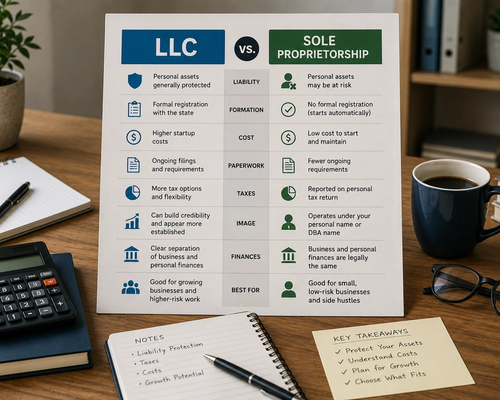
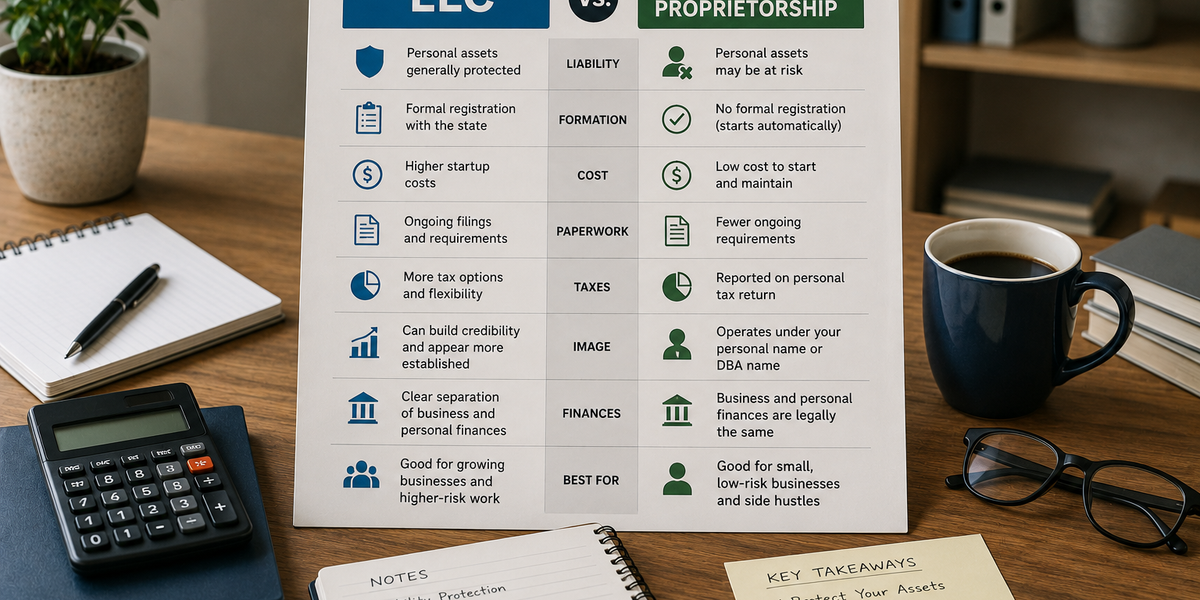
Sole Proprietorship vs. LLC: A Simple Comparison
Feature
Sole Proprietorship
LLC
Legal separation
No
Generally yes
Personal liability protection
Limited or none
Generally available
Formation process
Usually simple
Formal state registration
Startup cost
Usually low
Filing fees apply
Ongoing requirements
Fewer
Vary by state
Default taxation
Reported by the owner
Often similar for a single-member LLC
Tax flexibility
Limited
More options may be available
Best suited for
Small or low-risk businesses
Growing or higher-risk businesses
Final Thoughts
The real difference between a sole proprietorship and an LLC comes down to legal separation.
A sole proprietorship is simpler and usually less expensive, but the owner and business are legally connected. An LLC requires more paperwork and ongoing costs, but it generally provides a layer of separation between business obligations and personal assets.
Neither structure is automatically better for everyone. A small, low-risk side business may not need the same structure as a growing company with employees, contracts, debt, or significant financial exposure.
Choose based on your business risks, income, long-term plans, and local requirements. When the financial or legal consequences are significant, speak with a qualified attorney or tax professional before making a decision.