How to Pay Off Debt Faster: Snowball vs. Avalanche
Paying off debt can feel overwhelming, especially when you have several balances with different interest rates, minimum payments, and due dates. The good news is that you do not need to eliminate everything at once. You need a clear system that tells you which debt to focus on first.
Two of the most popular debt repayment strategies are the debt snowball and the debt avalanche.
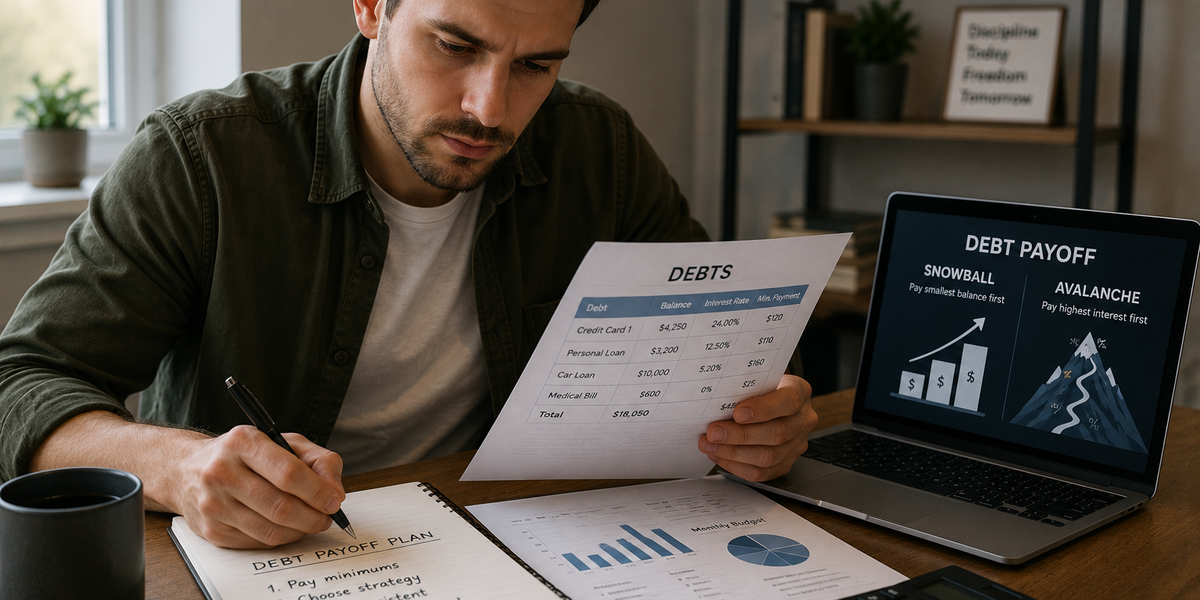
The snowball method focuses on paying off the smallest balance first. The avalanche method focuses on paying off the debt with the highest interest rate first.
Both approaches can help you become debt-free. The main difference is whether you prioritize motivation or saving the most money on interest.
Start by Listing All Your Debts
Before choosing a repayment method, create a complete list of what you owe.
For each debt, write down:
- The total balance
- The interest rate
- The minimum monthly payment
- The payment due date
Include credit cards, personal loans, medical debt, car loans, student loans, and other balances you want to repay.
Seeing the full picture may feel uncomfortable, but it gives you a clear starting point. It also helps you understand which debts are costing the most and which could be paid off relatively quickly.
Continue making at least the minimum payment on every debt. Missing payments may lead to late fees, additional interest, or damage to your credit history.
The snowball and avalanche methods determine where you direct any extra money after all minimum payments have been covered.
How the Debt Snowball Method Works
The debt snowball method focuses on the debt with the smallest balance, regardless of its interest rate.
Arrange your debts from the smallest balance to the largest. Make the minimum payment on every debt, then direct all additional repayment money toward the smallest one.
Once that debt is paid off, take the amount you were paying toward it and add it to the payment on the next-smallest balance.
As each debt disappears, the amount available for the next debt becomes larger—similar to a snowball growing as it rolls downhill.
For example, imagine you have:
- A $500 medical bill
- A $2,000 credit card balance
- A $7,000 car loan
You would focus on the $500 balance first while continuing minimum payments on the other two debts.
After paying off the medical bill, you would redirect that payment toward the credit card. Once the credit card is gone, the combined payment would go toward the car loan.
Why the Snowball Method Works
The biggest advantage of the snowball method is motivation.
Paying off a small balance quickly creates a visible result. You have one fewer payment to manage and evidence that your plan is working.
Debt repayment can take months or years. Early progress may make it easier to stay committed during that time.
The snowball method may be useful if you:
- Feel overwhelmed by the number of debts you have
- Have struggled to follow repayment plans in the past
- Stay motivated by quick achievements
- Want to reduce the number of monthly payments
Its main disadvantage is cost. Because the method does not prioritize interest rates, you may pay more interest than you would with the avalanche approach.
How the Debt Avalanche Method Works
The debt avalanche method focuses on the debt with the highest interest rate.
Arrange your debts from the highest interest rate to the lowest. Continue making minimum payments on all balances, then direct every extra dollar toward the highest-interest debt.
Once that debt is paid off, move the full payment amount to the debt with the next-highest interest rate.
For example, imagine you have:
- A credit card with a 24% interest rate
- A personal loan with a 10% interest rate
- A car loan with a 5% interest rate
With the avalanche method, you would focus on the credit card first, even if it has the largest balance.
After paying it off, you would move to the personal loan and then the car loan.
Why the Avalanche Method Works
The avalanche method is usually the most efficient approach mathematically.
High-interest debt grows faster and costs more over time. Paying it off first reduces the amount of interest that continues accumulating.
If you make the same total monthly payment, the avalanche method will generally help you pay less interest and may help you become debt-free sooner than the snowball method.
The avalanche approach may be a good fit if you:
- Want to minimize total interest costs
- Are motivated by financial efficiency
- Can stay focused without quick wins
- Have debt with very high interest rates
The main challenge is motivation. Your highest-interest debt may also have a large balance. It could take months before you completely eliminate the first account.
Even though you are making financial progress, the results may not feel as visible.
Snowball vs. Avalanche: Which Is Better?
The avalanche method usually saves more money because it targets the most expensive debt first.
However, the best strategy is not always the one that produces the lowest interest calculation. It is the one you can follow consistently.
If paying off a small debt gives you the motivation to continue, the snowball method may work better for you.
If reducing interest costs keeps you focused, the avalanche method may be the stronger choice.
You can also combine the two approaches.
For example, you might pay off one very small balance first to create momentum, then switch to the avalanche method and focus on high-interest debt.
Personal finance is not only about mathematics. Behavior matters too.
Find Extra Money for Debt Payments
The repayment method matters, but the amount you pay each month often has an even greater effect.
Look for realistic ways to increase your payments without making the plan impossible to maintain.
You might:
- Reduce a few optional expenses
- Cancel unused subscriptions
- Use bonuses or tax refunds
- Sell items you no longer need
- Take on temporary freelance work
- Direct part of a pay increase toward debt
Even an additional $50 or $100 each month can reduce repayment time and interest costs.
Avoid cutting every enjoyable expense if it makes the plan too difficult to follow. A sustainable strategy is usually more effective than an extreme budget that lasts only a few weeks.
Avoid Adding New Debt
Paying off debt becomes much harder when new balances continue replacing the old ones.
If possible, stop using the credit cards you are actively paying down. Remove saved card information from shopping websites, reduce unnecessary spending triggers, and use a budget to plan expenses.
At the same time, consider building a small emergency fund.
Without savings, an unexpected repair or medical expense may force you to borrow again. Even a modest financial cushion can help protect your progress.
Consider Lowering Your Interest Rate
In some situations, reducing the interest rate may help you repay debt faster.
Options may include refinancing, consolidating debt, or transferring a credit card balance to a lower-interest account.
However, review the details carefully. Look for transfer fees, loan fees, temporary promotional rates, repayment deadlines, and changes in monthly payments.
Debt consolidation does not eliminate debt. It only changes how the debt is organized. It is most useful when it reduces costs and is combined with a plan to avoid creating new balances.
Track Your Progress
Review your debt balances regularly.
Each month, record how much you paid, how much the balances decreased, and which debt you are targeting next.
Celebrate progress without creating new financial pressure. Reaching a milestone could mean having a special meal at home, taking a free day trip, or simply acknowledging how far you have come.
Paying off debt is a long-term process, and visible progress can make it easier to continue.
Finally
The debt snowball method pays off the smallest balance first. It creates quick wins and may make the repayment process feel more manageable.
The debt avalanche method pays off the highest-interest debt first. It generally reduces total interest costs and is usually the most financially efficient option.
Neither method works without consistency. Continue making minimum payments on every debt, direct extra money toward one priority balance, and move that payment to the next debt after each payoff.
Choose the approach that best matches how you stay motivated. The best debt repayment strategy is not simply the one that looks strongest on paper—it is the one you can continue until the final balance reaches zero.